The Knowledge Erosion Problem: Why Infrastructure Documentation Fails the Moment You Need It Most
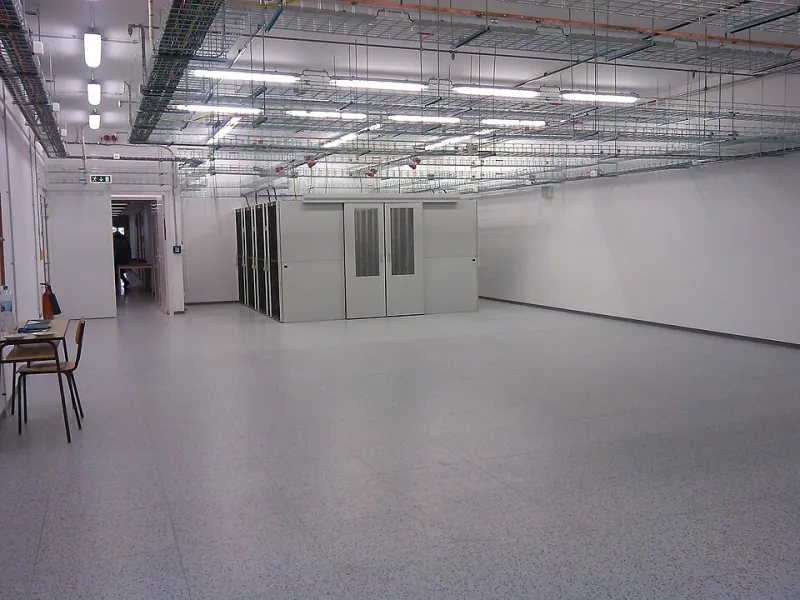
Photo: Venca24, CC BY-SA 4.0, via Wikimedia Commons
Consider the scenario: a storage array fails at 2:00 a.m. on a Tuesday. The on-call engineer pulls up the recovery runbook, a document last reviewed fourteen months ago. The network topology diagram it references reflects an architecture that was redesigned during a data center consolidation project the previous spring. Three of the IP addresses listed no longer exist. The escalation contact is a person who left the company eight months ago.
The engineer spends forty minutes reconstructing the environment from memory and live system queries before the actual recovery work can begin. The outage window doubles. The post-incident review identifies documentation as a contributing factor. A task is assigned to update the runbook. That task remains open for six weeks before it is quietly closed without completion.
This is not an edge case. It is a pattern that repeats itself across enterprise IT organizations with remarkable consistency, and the consequences extend well beyond extended recovery windows.
Why Documentation Decays by Design
The fundamental problem with infrastructure documentation is not that engineers are negligent about maintaining it. The problem is structural: documentation is a point-in-time artifact applied to a continuous-change environment. The moment a document is finalized, the infrastructure it describes begins to diverge from it.
Configuration changes, network modifications, software updates, hardware replacements, and architectural adjustments accumulate continuously in production environments. Each change incrementally widens the gap between the documented state and the actual state. In a large enterprise, hundreds of such changes may occur in a single week. No documentation practice built around periodic manual updates can close that gap sustainably.
Compounding the structural problem is an incentive misalignment. The work of updating documentation produces no immediate operational value. It does not resolve an incident, ship a feature, or satisfy a project milestone. In environments where infrastructure teams are chronically understaffed — a condition that describes the majority of US enterprise IT organizations — documentation maintenance is the first activity to be deferred when operational pressure increases. And operational pressure is nearly always present.
The Hidden Costs of Knowledge Loss
The consequences of documentation decay are often attributed to other causes because they manifest indirectly. Extended mean time to resolution during incidents is logged as an operational metric without its root cause being traced back to documentation quality. Compliance audit findings related to undocumented configurations generate remediation work without prompting a reassessment of documentation practices. Onboarding timelines for new infrastructure engineers stretch to six months or longer because institutional knowledge lives in the heads of senior staff rather than in accessible systems.
Each of these outcomes carries a measurable cost. Incident resolution time directly affects service availability and, in regulated industries, may trigger contractual penalties or reporting obligations. Compliance gaps identified during audits can require expensive remediation efforts and, in some cases, produce regulatory consequences. Extended onboarding periods reduce the return on hiring investments and increase the operational risk associated with staff turnover.
When these costs are aggregated across a large enterprise, the financial impact of poor documentation practices is substantial. Yet because the costs appear in separate budget categories — operations, compliance, human resources — they are rarely attributed to a common cause and therefore rarely addressed through a unified strategy.
The Limits of the Traditional Approach
The conventional response to documentation decay is to establish documentation standards, assign ownership, and schedule periodic reviews. These measures are not without value, but they address the symptom rather than the underlying structural problem.
Periodic reviews work when the review cadence is faster than the rate of infrastructure change. In most enterprise environments, that condition cannot be met with manual processes. A quarterly documentation review cycle in an environment that experiences continuous change produces documents that are, at best, a quarterly snapshot of a dynamic system. For disaster recovery and compliance purposes — the two contexts where documentation accuracy is most consequential — a quarterly snapshot is often not sufficient.
Ownership assignment addresses accountability but not capacity. Assigning a senior engineer as the owner of a runbook does not create the time for that engineer to maintain it. In most cases, ownership becomes a nominal designation that produces the appearance of accountability without the substance of it.
Toward Documentation That Reflects Reality
Addressing documentation decay requires a fundamental shift in how infrastructure knowledge is captured and maintained. The most effective approaches share a common characteristic: they reduce or eliminate the dependency on manual human effort to keep documentation current.
Configuration management systems and infrastructure-as-code platforms, when properly implemented, create a version-controlled record of infrastructure state that updates as changes are made. This is not a documentation system in the traditional sense, but it functions as one — providing an authoritative, current record of how systems are configured. For organizations that have invested in these capabilities, the challenge is connecting them to human-readable documentation that operations teams can use effectively during incidents.
Automated discovery and topology mapping tools represent another category of solution. These systems continuously scan the environment and generate updated representations of network topology, system relationships, and configuration state. The output is not always immediately usable as operational documentation, but it provides a foundation that significantly reduces the manual effort required to maintain accuracy.
For knowledge that cannot be captured through automated means — operational procedures, decision rationale, tribal knowledge held by experienced engineers — structured knowledge management practices are necessary. This includes regular knowledge transfer sessions where senior engineers document their understanding of complex systems, recorded troubleshooting walkthroughs that capture diagnostic reasoning, and post-incident documentation that transforms every significant operational event into a knowledge artifact.
The Onboarding Indicator
One of the clearest signals that an organization has a documentation problem is the length of time it takes a new infrastructure engineer to reach operational independence. When that timeline is measured in months rather than weeks, it typically indicates that the knowledge required to operate the environment is not accessible through formal documentation — it must be acquired through mentorship, observation, and accumulated experience.
This is not inherently problematic as a learning model, but it creates a significant operational dependency on the continuity of experienced staff. When those staff members leave, the knowledge they carry does not transfer automatically. The organization must rebuild it, and the cost of that rebuilding — in extended onboarding, in operational errors, in incident response delays — is paid repeatedly with each departure.
Organizations that treat documentation as a living operational system rather than a compliance artifact tend to exhibit shorter onboarding timelines, faster incident resolution, and greater resilience to staff turnover. The investment required to build and sustain that kind of documentation practice is real, but it is consistently smaller than the cumulative cost of the alternative.