Regulated Into Complexity: How Compliance Mandates Are Quietly Fracturing Enterprise Infrastructure
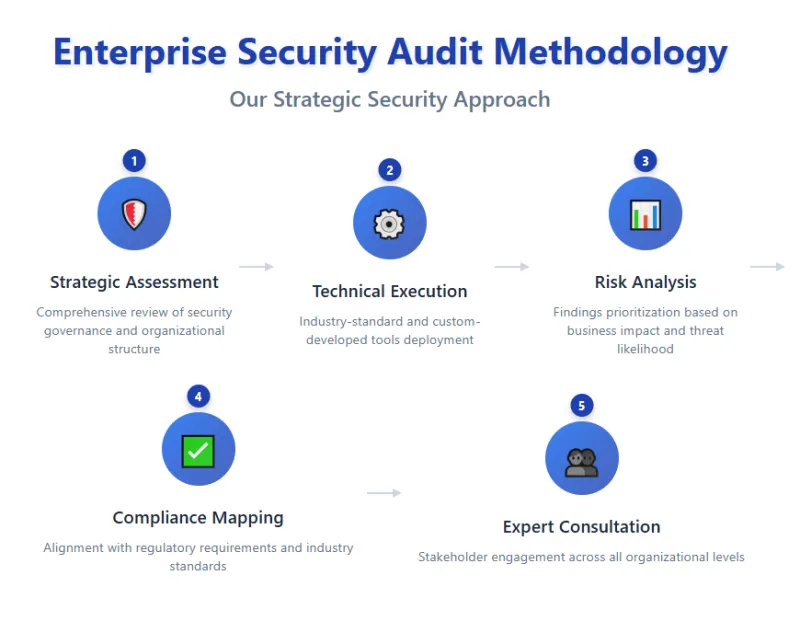
Photo: enterprise compliance regulation data center security audit, via www.ishantech.net
At some point in the past decade, compliance stopped being a governance function and started being an infrastructure problem. The moment that transition happened is difficult to identify precisely, but its consequences are visible in nearly every large US enterprise that operates across multiple industries, geographies, or customer segments.
The infrastructure team that once managed a coherent, rationalized environment now maintains parallel configurations — separate data handling pipelines for HIPAA-covered information, isolated network segments for PCI DSS cardholder data, distinct storage policies for state-level privacy law compliance, and increasingly, sovereign data requirements for international operations. Each of these configurations was justified individually. Collectively, they have produced an environment that is expensive to operate, difficult to audit, and genuinely fragile.
The Regulatory Landscape Has Changed Faster Than Infrastructure Can Adapt
The regulatory environment facing US enterprises has grown substantially more complex over the past several years, and that trajectory shows no sign of reversing. At the federal level, sector-specific frameworks — HIPAA, GLBA, FISMA, and the emerging requirements associated with critical infrastructure protection — continue to evolve. At the state level, California's CCPA and its successor CPRA have been joined by comprehensive privacy laws in Virginia, Colorado, Connecticut, Texas, and a growing number of additional states, each with its own specific requirements around data handling, retention, and subject rights.
For enterprises that operate across multiple industries — a health system with a financial services subsidiary, for example, or a technology company that serves both government and commercial clients — the overlap and occasional conflict between these frameworks creates compliance requirements that cannot be satisfied through a single unified infrastructure approach. The practical response has been to build separate infrastructure configurations for each regulatory context, resulting in what might be described as a compliance archipelago: isolated islands of infrastructure, each shaped by a different regulatory requirement, connected by integrations that are themselves subject to compliance scrutiny.
What Fragmentation Actually Costs
The financial consequences of compliance-driven infrastructure fragmentation are rarely captured in a single budget line, which is part of why they persist. The costs distribute across capital expenditure, operational overhead, licensing, and labor in ways that make attribution difficult.
On the capital side, maintaining parallel infrastructure configurations requires redundant hardware, software licenses, and cloud resource allocations. An organization that could theoretically consolidate its storage environment onto a single platform may instead maintain three separate configurations to satisfy the data residency and access control requirements of different regulatory frameworks. Each configuration requires its own capacity planning, its own refresh cycle, and its own vendor relationship.
Operational overhead compounds the capital cost. Infrastructure teams must maintain proficiency across multiple configuration models, each with its own operational procedures and failure modes. Incident response becomes more complex when the team must first determine which regulatory context a system belongs to before applying the appropriate recovery procedure. Change management processes must account for the compliance implications of modifications to any component within a regulated environment, adding review cycles and approval gates that slow the pace of operational work.
Audit preparation is perhaps the most visible manifestation of fragmentation cost. When infrastructure configurations are not unified, demonstrating compliance to auditors requires assembling evidence from multiple systems, each with its own logging format, access control model, and configuration management approach. Organizations that undergo multiple audits annually — a common situation for enterprises subject to both HIPAA and PCI DSS, for example — spend considerable staff time on audit preparation that could otherwise be directed toward operational improvement.
The Architecture Decisions That Made It Worse
Compliance-driven fragmentation is not simply a consequence of regulatory proliferation. It is also a product of architectural decisions made during the early stages of compliance program development — decisions that optimized for near-term compliance certainty at the expense of long-term infrastructure coherence.
When a new regulatory requirement emerges, the instinctive response is to isolate the affected systems and apply the required controls to that isolated environment. This approach produces a compliant configuration quickly and minimizes the risk of inadvertently affecting systems outside the regulatory scope. It is also the approach most likely to produce a fragmented infrastructure over time, because each new requirement generates a new isolation boundary.
An alternative approach — designing infrastructure controls that satisfy multiple regulatory requirements simultaneously — requires more analytical investment upfront but produces a more coherent environment. This is sometimes described as a common controls framework: identifying the controls that satisfy the highest common denominator of applicable regulatory requirements and implementing them uniformly across the environment, rather than implementing separate control sets for each regulatory context.
The challenge is that common controls frameworks require a level of cross-functional collaboration between infrastructure, security, legal, and compliance teams that many organizations find difficult to sustain. The regulatory expertise necessary to map requirements across frameworks is not typically resident in the infrastructure team, and the infrastructure expertise necessary to translate mapped requirements into viable architectural decisions is not typically resident in the compliance team. The gap between those two knowledge domains is where fragmentation is born.
Building Regulation-Resilient Infrastructure
Organizations that have successfully reduced compliance-driven fragmentation share several characteristics that are worth examining.
First, they treat regulatory requirements as infrastructure design inputs rather than post-design constraints. When compliance requirements are considered during the architectural design phase — rather than applied to an existing architecture after the fact — it is substantially easier to build unified control structures that satisfy multiple frameworks simultaneously. This requires compliance and legal teams to engage with infrastructure planning processes earlier and more substantively than is common in most enterprises.
Second, they invest in infrastructure platforms that offer granular, programmable control over data handling, access, and logging — capabilities that allow a single physical or virtual infrastructure layer to support multiple compliance postures through configuration rather than through physical separation. Software-defined networking, policy-based storage management, and identity-aware access control systems all provide this kind of flexibility. The investment required to implement these platforms is meaningful, but it is typically lower than the ongoing cost of maintaining parallel infrastructure configurations.
Third, they establish a formal process for evaluating the infrastructure implications of new regulatory requirements before compliance programs are designed around them. When a new state privacy law takes effect, the first question should not be how to isolate the affected data — it should be whether the existing infrastructure control framework can satisfy the new requirement without creating a new isolation boundary. In many cases, with appropriate analysis, it can.
The Compliance Conversation Infrastructure Leaders Must Have
For infrastructure leaders, the most important near-term action may simply be making the cost of compliance fragmentation visible to the broader organization. When the cumulative financial impact of redundant configurations, parallel operational processes, and extended audit preparation is quantified and presented alongside the compliance program's risk mitigation value, it creates the conditions for a more informed conversation about architectural strategy.
Regulatory requirements are not going to become simpler. The appropriate response is not to resist compliance investment, but to ensure that compliance investment is directed toward infrastructure approaches that scale — approaches that can absorb new regulatory requirements without generating new layers of fragmentation. That discipline, applied consistently, is the difference between a compliance program that strengthens the enterprise and one that quietly undermines it.